
Infant & Toddler Dentistry El Paso
Learn More About Our Infant & Toddler Program
The Infant and Toddler Program is designed to start your child visiting the dentist early and establish a dental home for them. By beginning early, your child will have the chance to grow in a non- threatening dental environment. This will lead to little or virtually no dental anxiety as they get older. In addition, this program allows us to educate you as a parent on what to expect from a dental standpoint as your child develops. Early dental care also helps protect young children from future dental problems. We invite you to learn a little more about our Infant and Toddler Program at Jim Bowden, DDS by reading below.
The Importance of Your Child’s Primary (Baby) Teeth

Temporary doesn't mean unimportant. In fact, your baby's pearly whites help your child chew food easily and pronounce words properly. They also save space for permanent teeth. If a baby tooth is lost too early, the teeth beside it may drift into the empty space. There may not be enough room left when it's time for the permanent teeth to come in. The result is crowded or crooked teeth.
Are You Child’s Teeth Coming in on Time?

If you're like most parents, you might be worried that if your child doesn't have any baby teeth by nine months or a year, it means something is wrong. But when it comes to getting the first set of teeth, there is a wide normal range of variability. Although the average appearance of the first tooth is around six months of age, it could be much sooner or much later.
The general pattern of eruption is that the two middle upper and lower teeth (central incisors) come in first. They are followed by the teeth next to them, the lateral incisors. The cuspids (or canines) follow, then the first and second molars. By the time your child is 3 years old, he or she will have a full set of 20 primary teeth. Here are the approximate ages when primary teeth make their appearance:
Why Is It Important to Start Dental Care Early?

The most important reason to begin a thorough prevention program is because dental problems can begin early. A big concern is early childhood caries (formerly known as baby bottle tooth decay or nursing caries). Once a child’s diet includes anything besides breast milk, erupted teeth are at risk for decay. The earlier the dental visit, the better the chance of preventing dental problems. Children with healthy teeth chew food easily and smile with confidence. Start your child now on a lifetime of good dental habits.
When you help your child develop a good dental hygiene routine of effective toothbrushing, you can disrupt the colonization of harmful oral bacteria and prevent the following problems from arising:
- White Spot Lesions – These are areas of the teeth that look whiter than the rest of the tooth due to the demineralization or dissolving of dental enamel. With proper tooth cleaning and fluoride applications, this process can be reversed. Application of fluoride varnish will aid in the remineralization (reversal) of this enamel lesion.
- Early Cavities - Early cavities can often present with few or no other symptoms, but a dental visit is needed. The earlier we see your child, the less invasive the treatment will be!
- Severe Cavities - If you see visible dark spots on your child’s tooth or teeth, the child needs a dental visit as soon as possible. Monitor the "gums" for evidence of a swelling (infection).
Helpful Tips & Tricks to Make Brushing Enjoyable
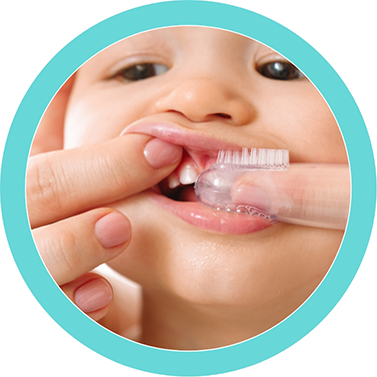
Many parents don’t realize that they need to start brushing their child’s teeth as soon as the first one erupts. As your child gets older, it’s not uncommon for them to push back on toothbrushing. That said, it’s important for parents to remember that brushing teeth is not an optional activity, even for little ones. Brushing prevents tooth decay, the most common childhood disease, which can begin as soon as your little one’s first baby teeth emerge!
Nearly every parent will be faced with tooth brushing resistance at some point during their child’s early years. Before you completely give up and resort to either skipping out on brushing or finding a way to forcibly brush your child’s teeth, try some of these ideas to help you win the tooth brushing battle for good.
Start Early
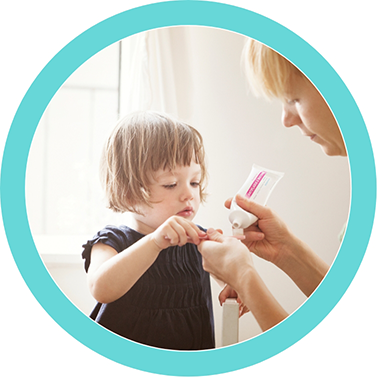
The earlier you begin brushing with your child, the more routine it will become. Before teeth emerge, wipe your baby’s gums with a damp cloth after each feeding. Start brushing once the first tooth arrives.
First tooth to 6 years of age:
- Brush with lentil-sized amount or a "smear" of fluoridated toothpaste
- Brush twice a day
- Introduce flossing once a day
- Caregiver performs
Over 6 years of age:
- Brush with fluoridated toothpaste
- Brush for 2 minutes twice a day
- Floss once a day
- Caregiver supervises
Let Your Child Choose the Gear
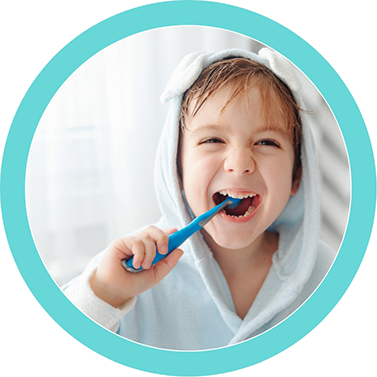
Not only does this allow your child to have some control over the toothbrushing experience, it also increases the chances that your little one will look forward to using the products. Toddlers can choose among character toothbrushes, electric toothbrushes and flavored toothpaste. Your child can also choose flavored floss or floss holders.
Brushing Can Be Playful & Fun!
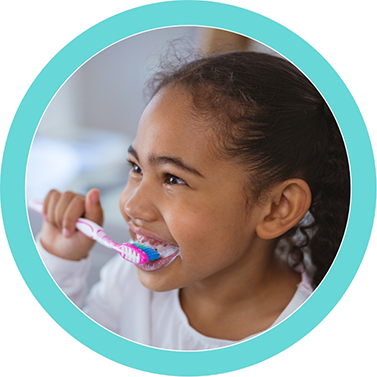
Is your current toothbrushing routine any fun? Consider adding in some silliness with the following suggestions:
- Play music that your child knows while they brush. It creates a great atmosphere while also helping you make sure your child brushes for the recommended two minutes.
- Create your own toothbrushing song. Sing it to a tune your child already knows such as “Jingle Bells” or “Twinkle, Twinkle, Little Star.”
- Talk to your child’s teeth. You can pretend to search for hidden food: “Where are those carrots you ate for dinner? They must be in here somewhere!” If your child likes superheroes or princesses, search for them amongst the teeth. The sillier your idea, the more fun it will be for your little one.
- Bring along a friend. Your child may enjoy “brushing” the teeth of a favorite stuffed animal or doll before you brush their teeth.
Time It Right

Aim to brush before some highly desirable activity. If your child enjoys a story before bedtime, brush right before. If bath time is fun, combine it with brushing.
Offer a Reward

Use a toothbrushing chart to track how often your child brushes without a fuss. Place a sticker on the chart with each success. Then offer a reward when your child obtains a certain number of stickers. Rewards don’t have to be big; an extra story at bed time can do the trick.
Make It a Family Affair
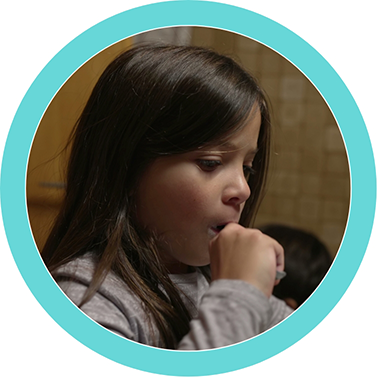
Brush your own teeth while your child brushes. If there are other people in the home, they should brush with you, too.
Be Consistent

If you brush in the morning after breakfast and at night before story time, keep it that way every day. This consistency will help your child know what to expect, leaving less room to complain.
Lead by Example
If you practice good oral hygiene, your child will know it’s important. Be enthusiastic about showing your little one how fun brushing is and exaggerate your motions so they are easier to copy.
Infant & Toddler Dentistry FAQs
When should my child first see a dentist?
The American Academy of Pediatric Dentistry recommends that children be taken to see a pediatric dentist at least six months after they get their first tooth. It may seem strange to think about taking a child who is under one into a dentist’s office’ but doing so will help make sure their teeth stay healthy and get them used to visits that will become a regular part of their life.
During the appointment, a dental exam will be performed. What is the dentist looking for? Not only does the pediatric dentist check for signs of tooth decay, but they’ll also check your child’s bite, gums and other parts of the mouth to make sure everything is in tip-top shape.
The dentist or dental hygienist may perform a dental cleaning or fluoride treatment to fight the “bad guys”– you may know them as cavities. The first dental visit is also a great time to ask questions and make sure you’re on the right path with your child’s oral hygiene routine. Before you know it, the appointment will be over, and your child will leave the office with a super smile!
How can I prevent tooth decay from nursing or using a bottle?
Some toddlers enjoy sipping from their sippy cup for lengthy periods of time. If their cups are filled with sweet fruit juices, they are bathing their teeth in the fruit sugars for large amounts of time, and this can lead to tooth decay. Parents should limit their child’s juice intake to mealtimes and give their infants or toddlers water in between.
Parents should also not let their baby go to bed with a bottle or sippy cup, as the liquid can pool in the mouth once the baby goes to sleep and cause dental problems.
When should bottle-feeding be stopped?
Children should be weaned from the bottle at 12-14 months of age.
Should I worry about thumb and finger sucking?
Thumb sucking is perfectly normal for infants; many stop by age 2. Prolonged thumb sucking can create crooked teeth or bite problems. If the habit continues beyond age 3, a professional evaluation is recommended. Your pediatric dentist will be glad to suggest ways to address a prolonged thumb sucking habit.
When should I start cleaning my baby’s teeth?
The sooner the better! Starting at birth, clean your child’s gums with a soft infant toothbrush or cloth and water. As soon as the teeth begin to appear, start brushing twice daily using fluoridated toothpaste and a soft, age-appropriate sized toothbrush. Use a rice-grain-sized smear of toothpaste to brush the teeth of a child less than 2 years of age. For the 2–5-year-old, dispense a pea-sized amount of toothpaste and perform or assist your child’s toothbrushing. Remember that young children do not have the ability to brush their teeth effectively.
Any advice on teething?
From six months to age 3, your child may have tender gums when teeth erupt. Many children like a clean teething ring, cool spoon or cold wet washcloth. Some parents swear by a chilled ring; others simply rub the baby’s gums with a clean finger. Systemic pain relief can also be achieved by delivering appropriate pain relievers based on your child’s’ age and weight.